Small accessories can make a noticeable difference to comfort during outdoor work, recreation or travel. One of the most versatile is the tubular gaiter, which can be worn around the neck and adjusted in several ways depending on the situation.
People browsing neck gaiters should consider fabric, fit, intended use and design rather than selecting a product only from its appearance.
What Is a Neck Gaiter?
A neck gaiter is generally a tube-shaped fabric accessory designed to sit around the neck and, depending on its construction, be repositioned around parts of the head or face.
Its simple format makes it useful for outdoor activities where someone wants an adaptable lightweight accessory.
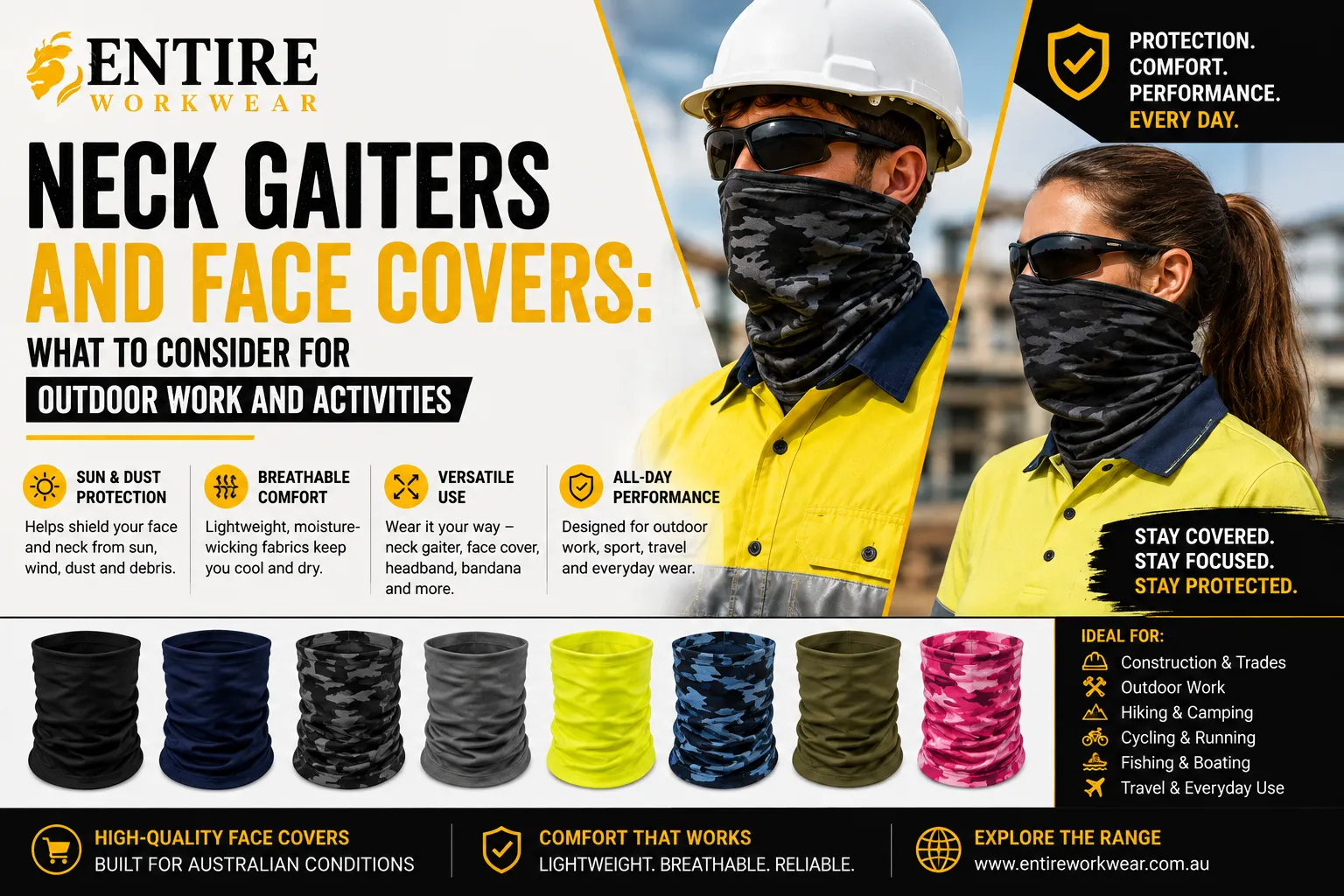
Common Ways People Use Gaiters
Depending on the product and activity, a gaiter may be worn as:
-
Neck coverage
-
A lightweight head covering
-
A headband
-
A temporary face covering
-
A sweat-management accessory
-
An extra layer during cooler conditions
Always consider the manufacturer’s intended use rather than assuming every gaiter offers the same performance.
Fit Matters More Than It First Appears
A gaiter should be comfortable enough for the intended period of wear.
If it is excessively tight, it may feel distracting. If it is too loose, it may move around constantly and require frequent adjustment.
When using a gaiter as a face cover, comfort and positioning become particularly important.
Think About Your Activity Level
An accessory suitable for casual walking may feel different during physically demanding outdoor work.
Higher activity levels can increase heat and perspiration, making fabric feel, breathability and ease of adjustment more important.
A Face Cover Is Not Automatically Protective Equipment
A general fabric face cover should not be assumed to replace respirators, masks or other PPE required for hazards such as dust, fumes, chemicals or infectious-risk environments.
Where formal respiratory protection is required, follow the workplace risk assessment and use the specified equipment.
Choose Fabric for the Conditions
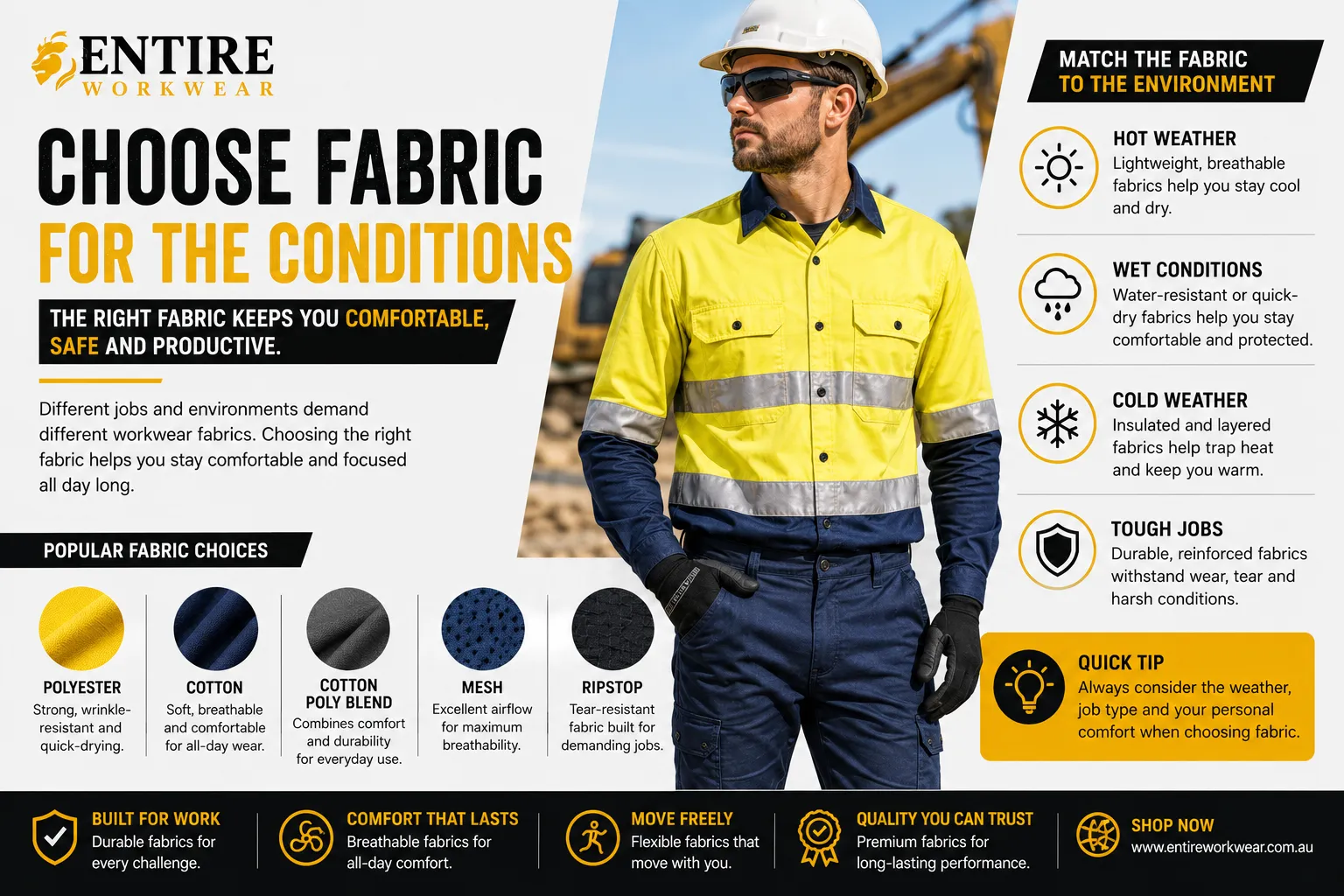
There is no universally ideal material for every activity.
Lighter fabrics may be appealing in warm conditions, while different constructions may suit cooler weather. Consider how the accessory feels once worn for more than a few minutes.
Useful questions include:
-
Will you wear it mainly outdoors?
-
Is the environment hot, cool or changeable?
-
Will you be physically active?
-
Do you need a lightweight accessory or extra warmth?
-
How frequently will it need washing?
These practical considerations can matter more than pattern choice.
Style Can Still Be Part of the Decision
Functional accessories do not have to be visually plain.
Someone who prefers graphic designs may consider a skull face mask style gaiter, while another person may prefer neutral colours or a plain design.
Style is personal, but consider where the accessory will be worn. A dramatic pattern suitable for recreation may not match every workplace dress policy.
Outdoor Work Requires Context
For workers, a gaiter may be only one element of the day’s clothing.
Depending on the job, workwear may also include hats, long sleeves, safety glasses, high-visibility garments and job-specific PPE.
Neck gaiters should complement these requirements rather than interfere with them.
Make Sure Accessories Do Not Create New Problems
Loose or incorrectly positioned clothing can be unsuitable around certain machinery or work processes.
Always follow site rules concerning clothing, hair and accessories.
If a face cover is permitted, make sure it does not interfere with required eye protection, hearing protection or other PPE.
Recreation Has Different Priorities
For hiking, cycling breaks, camping, festivals or general outdoor activities, the priority may shift toward convenience and adaptability.
A gaiter that folds into a small space can be easy to carry when conditions vary.
A skull face mask design may also serve as a visual accessory for people who want something more distinctive than a plain gaiter.
Washing and Reuse
Anything worn close to the skin should be cleaned regularly according to its care instructions.
Perspiration, dust and general outdoor use can accumulate on fabric. If you use neck gaiters frequently, owning more than one can make rotation easier.
Check the Product Care Instructions
Avoid assuming every fabric tolerates the same washing temperature or drying method.
Correct care can help maintain shape and comfort.
Why Choose Us

Entire Workwear has dedicated categories for bandanas and face-mask-style accessories, including plain and skull-pattern neck gaiters.
That range gives users the ability to compare a straightforward face cover style with more graphic options according to their activity and personal preference.
About Us
Entire Workwear supplies workwear and associated accessories, including a dedicated selection of bandanas and gaiters in plain and patterned styles.
Customers looking for a skull face mask style or simpler outdoor accessory can compare designs while considering fit, use and compatibility with the rest of their clothing.
Conclusion
A neck gaiter is simple, but selecting one thoughtfully still matters. Consider activity level, fabric, fit, weather, workplace rules and whether the accessory must coexist with other equipment.
Once those practical questions are answered, colour and pattern become much easier decisions. The best option is not necessarily the most complicated one; it is the one that comfortably suits how and where you intend to use it.