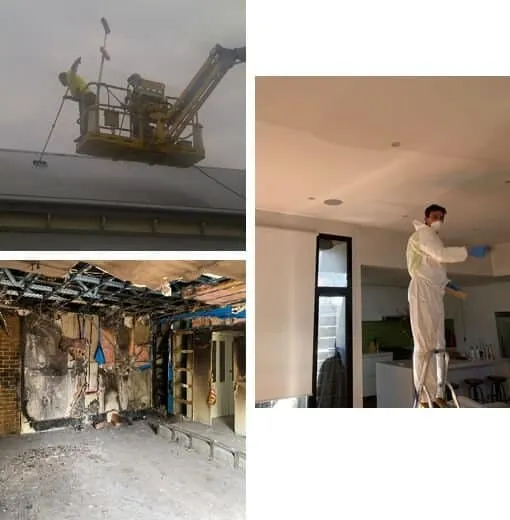
Your first step in Fire Smoke Damage Restoration should always be Safety. While the fire itself may be extinguished, the aftermath can leave you with dangerous levels of smoke, soot, water and structural integrity issues. Under no circumstances should you enter potentially dangerous spaces unless evaluated for the integrity of your structure, electrical system, and ceiling before proceeding with the cleaning.
What comprises the initial response?
This first phase requires emergency assessment and protection of the premises. Entry points should be protected from the weather as well as unauthorised persons, from wind damage and rain, for instance by installing new windowboards where necessary. Assessment also requires understanding the extent of the damage while identifying water-damaged components due to the firefighting efforts.
Why is Fire Smoke Damage Restoration taken in phases?
Fire smoke damage cleaning is done in three stages: an emergency assessment, cleaning and removal of damage, and repair or reconstruction. The intention for each phase is distinct. If cleaning begins before a safety inspection is complete, more hazards could arise, and a guided approach will allow you to save the property and safely return home.
How should you begin to clean smoke and soot?
Cleaning begins with hazard removal and taking care of airborne particles. Fine soot can spread easily to all areas in the home, where fine particles can be caught more effectively by a HEPA filter, and not an upright carpet cleaner. Disposing of all dirty air filters and safely redirecting air where possible will minimise further distribution of soot.
How to clean walls and ceilings?
Dry off loose soot from the surface with brushes before wetting surfaces and using wet-cleaning agents. When it has been dry-cleaned from suitable painted walls and ceilings by a dry-cleaning sponge (which helps pick up soot without causing it to spread across the surface), some cleaners could be used to finish it off and eliminate residue, but there are methods used for different materials, especially porous ones. These materials might take a deeper cleaning process or even need to be completely replaced.
When does a smoke damage cleaning service become necessary?
A smoke damage cleaning service is often employed when smoke has caused a wide scope of damage, has been drawn into too many rooms, permeates to inconspicuous areas and leaves persistent odours. Professional equipment is also necessary when the deep cleaning and airing processes are intended to overcome contamination. Professional services are also important to know when a material is beyond restorative repair. They can reduce the possibility of residue remaining in an area.
How do you remove odours that come with smoke?
Smoke odours often linger even after soot seems to have been remediated. Smoke particles will permeate into wood, textiles, upholstered furnishings and insulative materials, as well as other fibrous and porous materials. Air filtration can be employed in order to mitigate indoor air pollution. Professional deodorisation is typically applied through thermal fogging or hydroxyl treatment, depending on the property and the material at risk for the odours at issue.
What happens to water damage after firefighting?
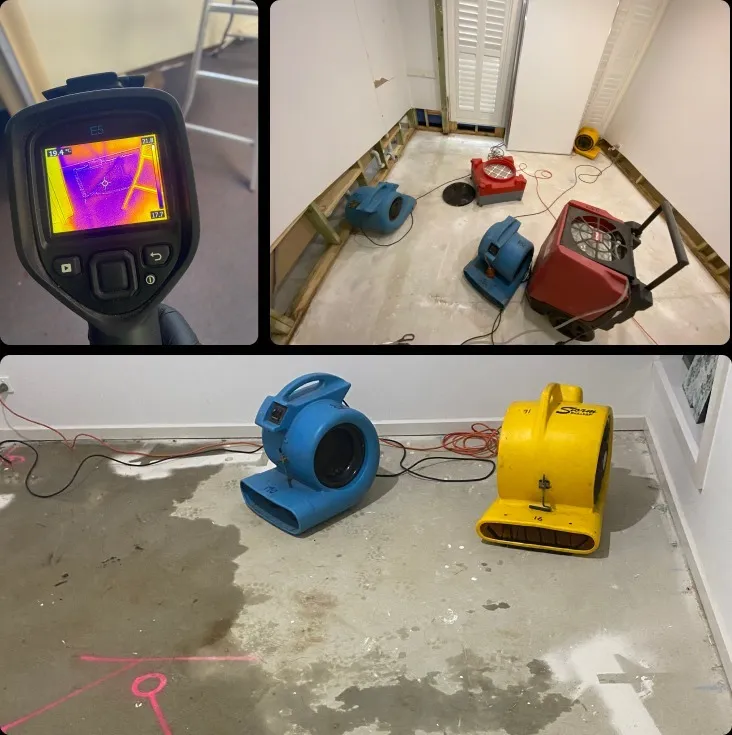
Firefighting provides significant quantities of water to the floors, walls, ceiling and furniture. The drying process should be commenced immediately to minimise the risk of additional damage. Wet areas and concealed, damp sections can be detected using moisture tests.
Controlling moisture levels can be achieved by the use of dehumidifiers and air movers.
Mould prevention is also a consideration.
When do repairs and reconstruction begin?
Repairs commence following inspection, cleaning, drying, and removal of damage. It may comprise small repairs such as re-painting and re-carpeting, or similar flooring is put down as the old flooring is now ruined. In large repair works, it would not just be the damaged wall/ceiling/ wiring or building structure that would have the repair; work on all these areas would have to be carried out prior to the fine finishing taking place.
The fire and smoke restoration process is designed carefully and skillfully to restore property devastated by damage to a habitable home into a safer, healthier and more comfortable living place. Contact Capital Facility Services for consultancy and services; book your fire and smoke restoration needs- affordable, excellent!